What Is Laser Marking?
Laser cutting and engraving is the most commonly used term for the process of modifying a material’s surface by processing it with a laser.
Although the term marking is less widely known, it is just as effective for many applications.
Industrial laser systems are widely used for:
cutting,
engraving, and
marking.
How Does Laser Marking Work?
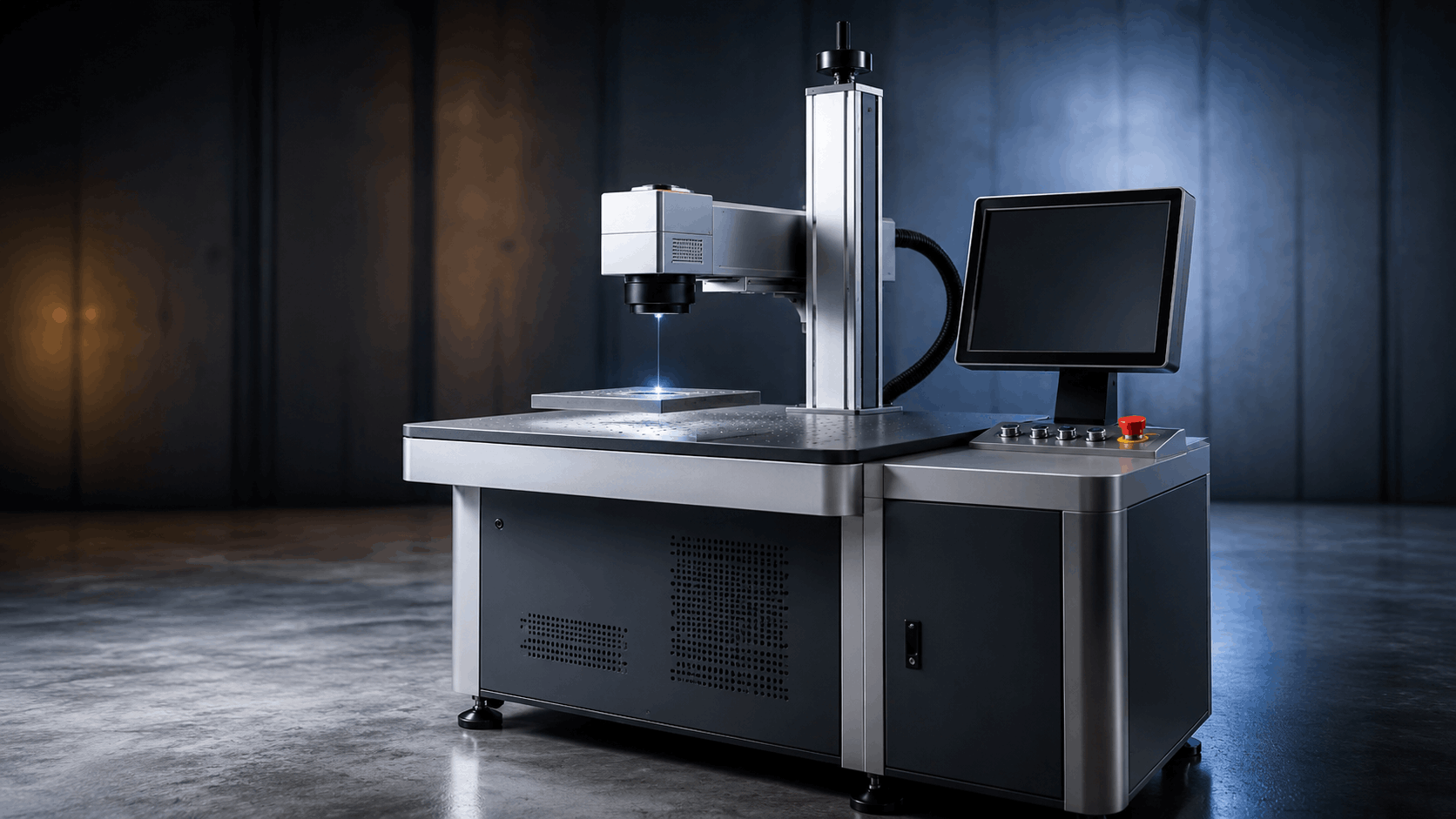
Laser marking uses a focused laser beam to create permanent marks on a material’s surface without removing any material.
During this process:
the color and/or texture of the surface is modified,
permanent markings such as serial numbers, logos, and barcodes are produced.
The main difference between laser marking and laser engraving is:
Marking: No material is removed.
Engraving: Material is physically removed from the surface.
The laser beam heats the surface in a controlled manner, creating color and structural changes.
Compared to manual methods, this enables much faster and highly repeatable results.
The Four Main Laser Marking Methods
There are several techniques for marking surfaces with a laser. The most common methods are outlined below.
1. Annealing
The surface is heated by the laser just enough to create light oxidation.
It is mainly used on carbon-containing metals.
Common materials include:
titanium
stainless steel
2. Carbon Migration
Laser heat causes carbon molecules to migrate to the surface.
As a result, a dark-colored mark is formed.
This method can only be applied to carbon-containing metals.
3. Foaming
Mainly used for plastic materials.
The laser melts the material and creates a foamed structure on the surface.
After cooling, the mark becomes:
lighter in color,
smooth, and
low in density.
4. Color Marking
The surface is oxidized in a controlled manner.
Depending on the material type, a:
high-contrast, and
decorative
surface appearance is obtained.
Which Materials Can Be Marked with a Laser Marker?
An important point should be noted:
Unlike fiber laser engraving and cutting systems, CO₂ lasers are not designed to directly mark bare metals.
However:
coated metals can be marked using a CO₂ laser,
the coating is removed and the underlying metal is revealed.
This method is widely used, especially in personalization applications.
Marking Bare Metals with a Marking Compound
On uncoated metals, a similar result can be achieved by applying a special laser marking compound to the surface.
For this purpose, specially formulated MarkSolid sprays and pastes are used.
Typical application steps:
Apply the compound to the surface.
Allow it to dry for 15–20 minutes.
Perform the laser marking.
Clean the residue using a cloth and IPA solution.
Main Materials That Can Be Laser Marked
Coated metals
Uncoated metals (a marking compound is required for CO₂ lasers)
Leather
Glass
Silicone
Ceramics
Cardboard
Fabrics and textiles
Types of Laser Marking Machines
There are various laser marking systems designed for different applications.
The two most common systems are:
CO₂ laser markers
Fiber laser markers
CO₂ Laser Markers
CO₂ laser marking machines are mainly used on non-metal surfaces.
These sealed-tube systems are commonly used for:
logos,
product identification,
dates, and
serial numbers.
Applications
CO₂ lasers are particularly effective on:
paper
wood
plastic
leather
Advantages
Ideal for coated metals such as painted brass and anodized aluminum
High flexibility for electronics, medical, and packaging industries
Disadvantages
Marking uncoated metals requires a marking compound and increases operating cost
Processing area is limited on galvo-based CO₂ systems
Large-format CO₂ machines are slower than galvo systems
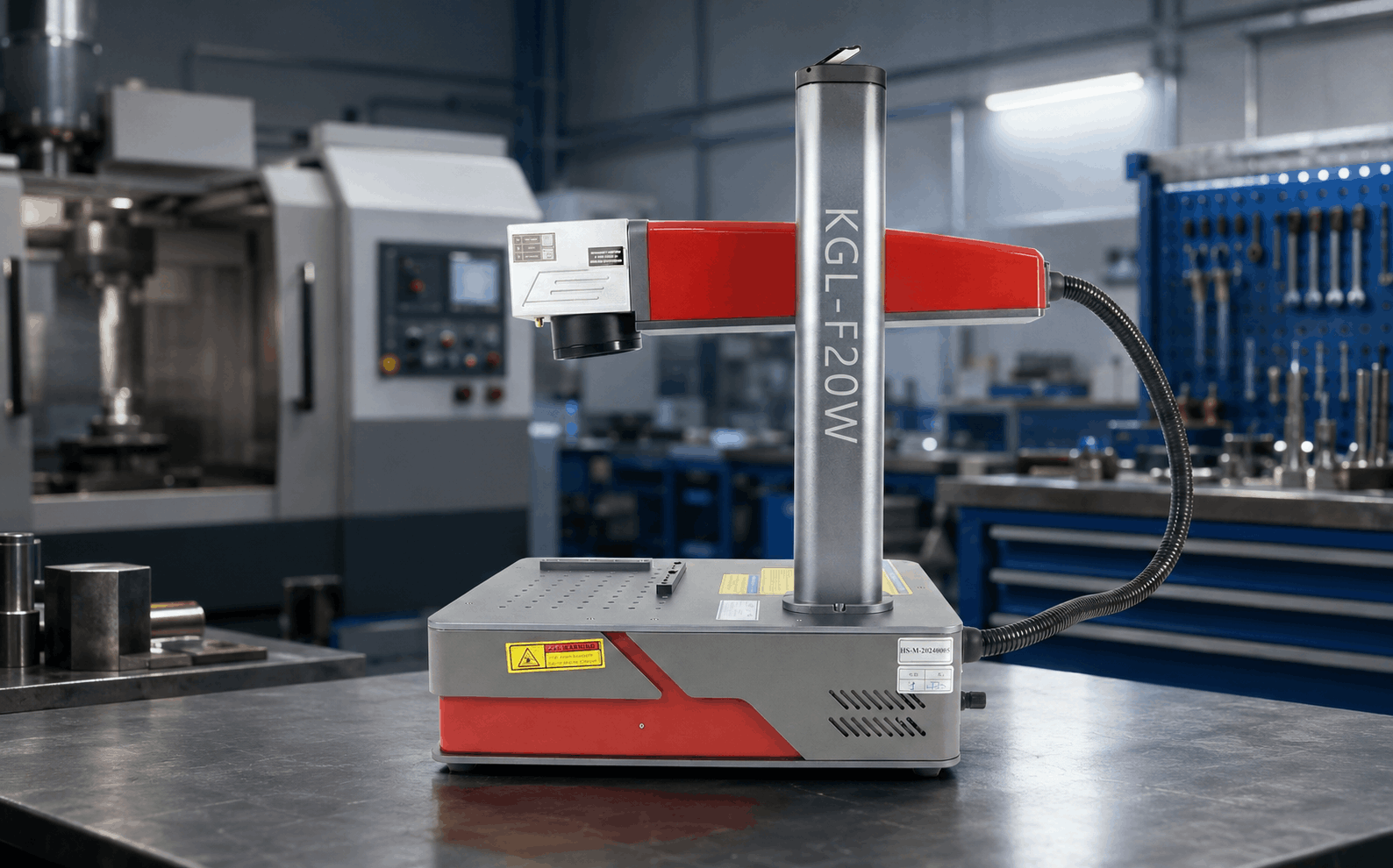
Fiber Laser Engraving Machines / Markers
Fiber lasers typically:
operate in the 20–50 W power range,
generate a wavelength of approximately 1090 nm,
use ytterbium-doped fiber laser sources.
Thanks to these characteristics, they are ideal for metal marking.
Applications
Deep engraving on hard metals
High-speed marking of small and precision parts
High-resolution logo and code marking
Advantages
High marking speed
No consumables required
Low power consumption
Minimal maintenance requirements
Disadvantages
Performance may decrease on some highly reflective metals
Deep engraving capability may be limited on certain materials
Other Laser Marking Systems
In addition to CO₂ and fiber lasers, the following systems are also used:
Nd Laser Markers
Mark thin metal sheets without bending or deformation
Suitable for aluminum, steel, and coated metals
Green Laser Markers
Typically operate in the 5–10 W range
Highly effective on reflective surfaces
Common applications:
soft plastics
integrated circuits
PCB boards
UV Laser Markers
Operate at a wavelength of 355 nm
Deliver excellent results on:
plastics
glass
ceramics
They are ideal for micro-marking in electronics components and medical equipment.
Examples of Laser Marking Applications
Laser marking is most commonly used for:
text marking
serial number marking
barcode and DataMatrix code generation
In addition, with the so-called “day–night marking” technique, markings that are readable both in dark and illuminated environments are produced for products such as:
keyboards,
vehicle instrument panels,
vending machines.
Benefits of Laser Marking
Very high production speed
Up to 10 times faster than CO₂ laser cutting systems
Preserves the structural integrity of the material
Minimal waste and contamination
Full traceability through coding
Extremely durable, wear-resistant markings
Why Choose KGL Laser Machines?
All of our laser engraving and marking machines are:
supplied with advanced software packages,
supported with delivery, installation, and training services,
offered with competitive pricing.
In addition, KGL Lazer products provide:
lifetime free e-mail and phone support,
highly rated technical service support.
To contact our team located in İzmir, you can reach us directly at:
📞 +90 505 249 5462